


Cobano Occupancy Analysis for Villa Owners
- October 17, 2026
- Blog
A Cobano occupancy analysis helps villa owners read demand, seasonality and booking pace, then price stays with care for stronger, steadier returns,... Read More
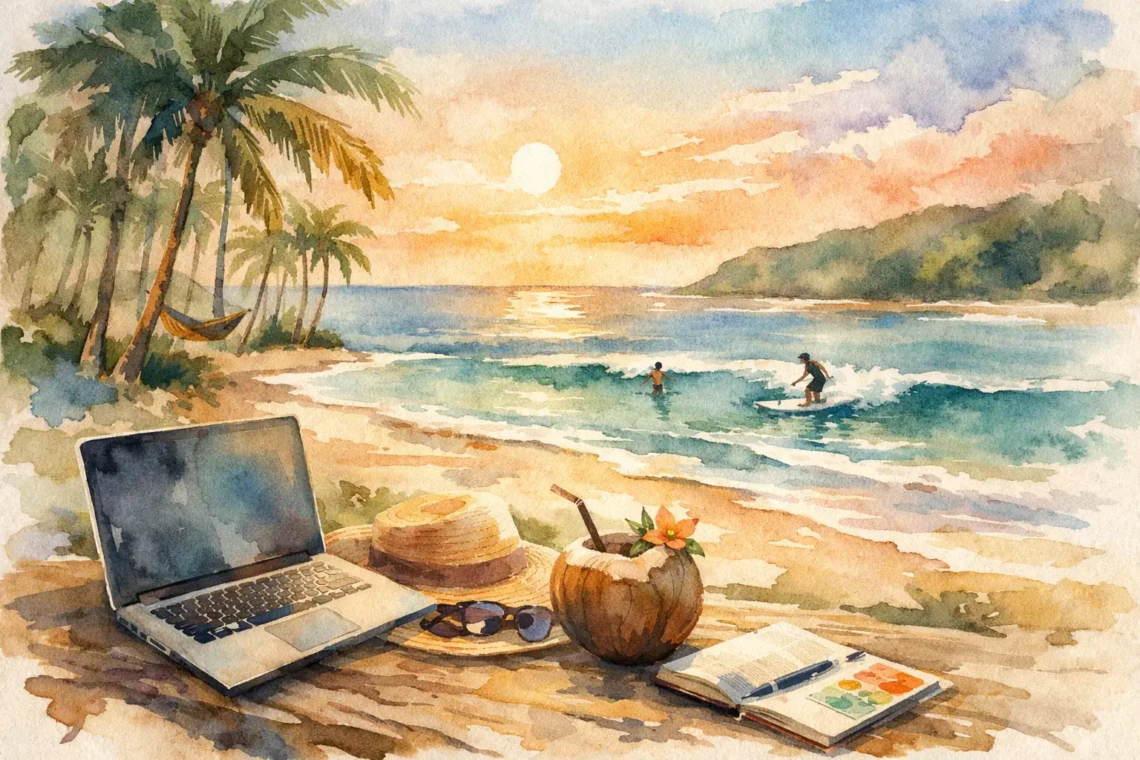
A lot of people arrive in Santa Teresa with a laptop, a beach routine, and a budget that looked reasonable on paper. Then they spend a week paying peak-season rental rates, buying smoothies after every surf session, and grabbing taxis because the road is rough. The digital nomad monthly cost Santa Teresa can feel either manageable or surprisingly high, depending on how you set up your month.
Santa Teresa is not the cheapest base in Costa Rica, and that is worth saying clearly. You are paying for a very desirable beach town, strong demand, and a lifestyle many remote workers actively seek out – surf before work, jungle around you, good cafés, and access to beautiful stretches of coast. But there is also a big difference between staying right in the busiest core and choosing a quieter base nearby with a kitchen, laundry, reliable Wi-Fi, and space to settle in.
If you are planning for one month or longer, think beyond nightly accommodation rates. A realistic monthly cost needs to include housing, groceries, eating out, transport, workspace needs, mobile data, wellness or surf spending, and the small extras that quietly add up.
For most solo digital nomads, a realistic monthly range is about CAD 2,400 to CAD 4,500. For couples sharing accommodation, the cost per person often drops noticeably, and a comfortable monthly budget can land closer to CAD 1,900 to CAD 3,200 each. That range is wide because Santa Teresa has two very different versions of daily life. One is short-stay, convenience-first, social, and spendy. The other is slower, more local, and easier to sustain.
The biggest variable is accommodation. The second is how often you eat out. After that, transport tends to decide whether your budget stays stable.
In Santa Teresa, rent can swing dramatically based on season, location, privacy, and whether you book a place designed for longer stays. A simple room may work for a short trip, but many remote workers quickly realize they need more than a bed and decent internet. They need somewhere quiet for calls, a proper kitchen, air conditioning or good airflow, and laundry access.
A modest room or studio can start around CAD 1,000 to CAD 1,600 per month in lower demand periods, but options at that price are usually limited and get booked quickly. A more comfortable apartment or small house often lands around CAD 1,600 to CAD 2,600. If you want a well-equipped private villa or a calm nature-based stay within reach of the beach towns, the number can move higher, especially in peak season.
This is where trade-offs matter. Staying right by the main action can save time going to cafés, restaurants, and surf spots, but it usually costs more and can come with more noise. Staying a little outside the busiest area often gives you better value, more peace, and a setup that feels livable for a full month rather than just fun for a weekend.
For digital nomads, the right accommodation is often the one that lowers spending in other areas. A place with a full kitchen reduces restaurant costs. Laundry saves time and money. Reliable Wi-Fi means you do not need to pay for coworking every day. A peaceful setting can make a long workweek much easier.
Food is where Santa Teresa can either feel balanced or expensive very quickly. If you eat out for most meals, your monthly budget will rise fast. Casual breakfasts, smoothie bowls, coffee stops, beach lunches, and dinners out are part of the local rhythm, but they are also one of the easiest ways to overspend without noticing.
A grocery-first approach is much more sustainable. For one person, monthly groceries often sit around CAD 350 to CAD 650, depending on how often you buy imported products. Local fruit, rice, beans, eggs, and basic staples help keep costs down. Imported snacks, specialty foods, and frequent convenience shopping push them up.
Eating out regularly can add another CAD 500 to CAD 1,200 per month for one person. Some nomads are happy to budget for that because they value the social side of cafés and restaurants. Others prefer a middle ground – coffee out, a few dinners each week, and most breakfasts and lunches at home. That is usually the sweet spot.
Transport is often underestimated in any digital nomad monthly cost Santa Teresa plan. Distances may not look huge, but road conditions and heat can change how practical it feels to get around every day.
If you stay close to where you work, eat, and surf, you may spend very little. But many long-stay visitors rent an ATV, scooter, or car for flexibility. Monthly rentals can vary widely, but expect transport to cost anywhere from CAD 150 on a very lean budget up to CAD 900 or more if you want your own vehicle full-time.
Taxis and private rides are convenient, though not cheap for everyday use. Walking is possible in some areas, but not always pleasant or practical depending on weather, road conditions, or how much gear you are carrying. For longer stays, choosing accommodation in the right area can save more money than choosing the cheapest nightly rate.
Most remote workers no longer ask only whether Wi-Fi exists. They want to know if it is stable enough for calls, uploads, and a normal workday. In Santa Teresa, good internet is available, but quality depends on the property.
If your accommodation has dependable Wi-Fi and a table you can comfortably work from, your monthly work costs may stay low. If not, you may end up buying coworking passes or spending more in cafés to secure a good working environment.
Coworking can range roughly from CAD 120 to CAD 300 per month depending on access level and amenities. Some nomads love the structure and community. Others find they only need it for a few days each month when they have meetings or need stronger focus.
Mobile data is usually a manageable expense, often around CAD 20 to CAD 50 monthly depending on your plan and usage. It is not a replacement for proper internet, but it helps as a backup.
This is the category that makes Santa Teresa feel magical, and also the one that can quietly stretch your budget. Surf lessons, board rental, yoga classes, gym passes, massage appointments, and sunset drinks are all part of the local lifestyle. None are mandatory, but many people come here because they want some version of that experience.
A budget-conscious nomad might spend CAD 100 to CAD 250 per month in this category. Someone fully embracing the town’s wellness and surf culture could easily spend CAD 500 to CAD 1,000 or more.
There is no right number here. It depends on why you came. If your priority is focused work with beach access, you can keep this category controlled. If you are treating the month as part retreat, part relocation test, you may want to leave more room.
A lean but realistic solo budget might look like this: shared or simple accommodation, mostly cooking at home, limited transport costs, and a few paid activities. That usually lands around CAD 2,400 to CAD 2,800.
A comfortable solo budget with a private, well-equipped stay, mixed dining habits, moderate transport use, and occasional coworking often falls between CAD 3,000 and CAD 3,800.
A more flexible lifestyle budget with premium accommodation, frequent dining out, regular vehicle use, and lots of classes or activities can move past CAD 4,500.
For couples, shared housing changes the picture considerably. A peaceful villa stay with a kitchen and laundry can make the monthly cost feel much more reasonable per person, especially if both travellers work remotely and split accommodation and transport.
The best way to control your Santa Teresa budget is not to cut every pleasure. It is to choose your setup carefully from the start. A longer-stay property with proper amenities often costs more upfront than a basic short-stay room, but it can reduce restaurant spending, transport needs, and work stress.
This is especially true if you want a calmer routine. Many remote workers do better when they are close enough to the beach towns to enjoy them, but not sleeping in the busiest strip every night. That balance tends to support both better workdays and better budgeting.
If you are comparing options, look closely at what is included. Wi-Fi quality, air conditioning, parking, kitchen equipment, laundry, and privacy all affect your real monthly spend. A cheaper place that sends you to cafés for work and restaurants for every meal is often not cheaper by the end of the month.
For travellers testing the area before a longer move, staying in a comfortable home base can also help you understand the region more honestly. You see what life feels like when you are not on holiday mode all the time. That matters if Santa Teresa is more than a quick escape for you.
A place like Villas Pura Vida can make sense for nomads who want that quieter rhythm – modern essentials, nature around you, and practical access to the coast without feeling packed into the busiest part of town.
Santa Teresa can be affordable enough for a month, but only if your choices match the way you actually live and work. If you build your budget around comfort that supports your routine, rather than constant convenience spending, the experience usually feels better from day one.



A Cobano occupancy analysis helps villa... Read More

Find the best Santa Teresa villas... Read More

Considering second homes in Costa Rica?... Read More

you are in reality a good webmaster. The web site loading speed is incredible.…
If the digital nomad is looking for tranquility, space, high-speed internet and the chance…
Great content! Keep up the good work!
You are very welcome and thanks for your comment. We really appreciate it.
Once you’ve nailed down the desired functionality of your new patio, think about the…

Enter your email address and we will send you a link to change your password.

[…] value is not only about nightly rates. It is also about what you get for the price: more privacy, more room, better sleep, fast internet connection. That´s what I like about Villas Pura Vida. […]