


Cobano versus Playa Carmen for Your Stay
- October 7, 2026
- Blog
Compare Cobano versus Playa Carmen for beaches, supplies, quiet stays and remote work, then choose the right base for your Costa Rica... Read More
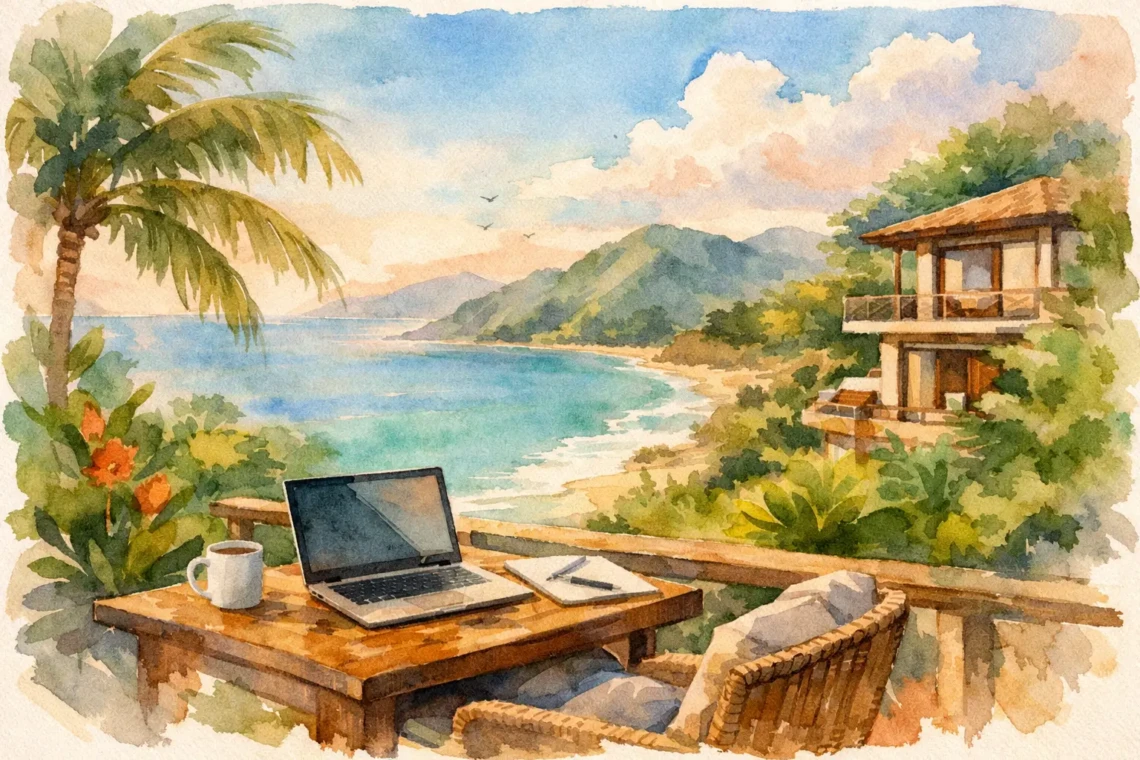
A lot of people picture remote work in Costa Rica as a laptop on a café table in the middle of town. It sounds good for a day or two. For a month, or longer, the trend remote work rentals Costa Rica travellers are actually choosing looks a bit different – private space, reliable Wi-Fi, a real kitchen, air conditioning, laundry, and enough calm to finish a workday before heading to the beach.
That shift matters because remote work is no longer just for backpackers or short-stay digital nomads. More guests are arriving as couples, solo professionals, or small families who want a comfortable base that feels livable. They still want nature, surf, sunsets, and easy access to places like Santa Teresa and Montezuma. They just do not want their accommodation to feel improvised.
A few years ago, many remote workers were happy to trade comfort for location. If the rental was close to the beach and had some kind of internet connection, that was often enough. Now expectations are more grounded in daily life. People are working full schedules, taking calls, managing teams across time zones, and staying longer. That changes what makes a rental feel worth booking.
The strongest trend is simple: remote workers want properties that support routine, not just vacation photos. A beautiful setting still matters, but so does having a dining table that works as a desk, enough outlets in the right places, a kitchen that makes it easy to cook at home, and a quiet bedroom where sleep comes easily. The difference between a good holiday rental and a good remote work rental is often found in those small details.
In Costa Rica, this shift is especially visible in beach regions where demand used to focus almost entirely on short leisure stays. Now there is growing interest in villas and apartments that balance access and peace. Guests want to be near the action, but not inside the noise.
Reliable internet sits at the centre of the decision, but it is not the whole story. Fast Wi-Fi attracts attention. Stable Wi-Fi keeps people happy. Remote workers are usually not asking for luxury. They are asking for less friction.
That includes practical comforts that start to matter after the first few days. Air conditioning can be a major plus during hotter periods, especially for those working indoors for long hours. Laundry matters more than many owners expect, because long stays are built on ordinary habits. A full kitchen lowers costs and makes a rental feel sustainable for several weeks instead of several nights.
Privacy is another big part of the trend. Shared hostels and social coliving spaces still have their place, especially for younger travellers looking for instant community. But many remote workers have moved beyond that stage. They want quiet mornings, secure accommodation, and room to separate work from rest. Entire-place rentals often win for that reason.
There is also a growing preference for accommodation that feels connected to nature without being isolated in a stressful way. In practice, that means hearing birds in the morning, seeing greenery from the terrace, and still being within reasonable reach of groceries, beaches, and day trips.
Well-known beach towns still attract remote workers, but many guests are becoming more selective about where exactly they stay. Being directly in a busy centre can sound appealing until the motorbikes, nightlife, traffic, and parking issues become part of every workday.
That is why quieter pockets near key beach destinations are getting more attention. They offer a better rhythm. You can work in peace, then drive to surf, dinner, or sunset without needing to live inside the busiest stretch. For people staying several weeks, this balance often feels much more realistic.
In the Santa Teresa area, that pattern is easy to understand. Guests often want access to Playa Carmen, Playa Hermosa, Montezuma, or Manzanillo, but they also want a home base where they can actually concentrate. A peaceful villa surrounded by nature can be a better fit than a louder rental in the middle of town, especially for anyone juggling meetings and deadlines.
One reason the remote work rental market feels different now is length of stay. Instead of booking three or four nights, more people are considering two weeks, one month, or even a season. Once a stay crosses that line, priorities change fast.
Nightly price still matters, of course, but value becomes more important than the lowest rate. Guests start asking different questions. Is there enough storage? Can two people work from the same space without disturbing each other? Is the kitchen actually equipped for daily cooking, or just lightly staged for photos? Does the property feel well cared for?
This is where thoughtfully hosted villas tend to stand out. A smaller, owner-led hospitality style can feel more reassuring than a high-volume operation, especially in an unfamiliar destination. Clear communication, honest expectations, and local guidance make a big difference during longer stays.
For some travellers, a remote work trip also becomes a scouting trip. They arrive for a month, fall into a good routine, and start imagining a longer future in the area. That is one reason remote work rentals and real estate interest often overlap in places like Costa Rica.
Not every remote worker wants the same thing, and that is where the decision gets more personal. If your main goal is meeting people every day, a social stay in a busier area may suit you better than a quiet villa. If you are working North American hours and need calm evenings for calls, privacy may matter more than nightlife.
Budget is another real factor. Entire villas with strong amenities usually cost more than basic rooms or hostel-style options. But the comparison is not always equal. If you are staying longer, cooking often, and avoiding coworking fees or transport headaches, the overall value can tilt back in favour of a better-equipped rental.
Seasonality also affects the experience. In greener months, the landscape can feel especially lush and peaceful, but road conditions and weather may require more planning. In drier, busier periods, beach access may feel easier, but availability narrows and prices can rise. It depends on whether you prioritize atmosphere, logistics, or budget.
The best remote work rentals do not force you to choose between productivity and enjoyment. They support both. That usually starts with comfort you can trust every day, not just on arrival. Good sleep, a cool room, a functional kitchen, and a clean, well-designed space create the foundation.
Then the destination does its part. Costa Rica remains appealing because workdays can end with a swim, a surf session, wildlife nearby, or a drive to another beach town on the weekend. That combination is still powerful. The difference now is that more guests want to enjoy it from a place that feels settled and calm.
This is why boutique properties with a small collection of well-equipped villas are matching the moment so well. They offer a more personal style of hosting and a more livable kind of stay. For many guests, that feels closer to what remote work in Costa Rica should be.
Villas Pura Vida reflects that shift in a simple way – private villas, modern essentials, peaceful surroundings, and easy access to some of the area’s best beach destinations. For remote workers who want more than a temporary crash pad, that kind of setup makes sense.
When you are comparing rentals, the smartest move is to read the listing as if you were moving in for a few weeks, not escaping for a weekend. Photos can show style, but they rarely show routine. Look for signs of how the place actually functions. Is the layout practical? Are the amenities clearly described? Does the property seem designed for real stays, not just quick bookings?
It also helps to be honest about your own habits. Some people need absolute quiet to work. Others are fine with some background noise if they are close to restaurants and surf. Some will happily rent a car and stay in a more peaceful setting. Others want everything within walking distance. The right choice is not universal.
What is clear, though, is that the trend is moving toward more intentional stays. Remote workers are choosing rentals that let them feel good for longer, not just impressed on day one.
If you are planning a work stay in Costa Rica, aim for the kind of place where your days can feel simple: coffee in the morning, steady internet, a productive afternoon, and nature waiting just outside when you log off.



Compare Cobano versus Playa Carmen for... Read More

Can I work from Cobano? Learn... Read More

See an example digital nomad month... Read More

you are in reality a good webmaster. The web site loading speed is incredible.…
If the digital nomad is looking for tranquility, space, high-speed internet and the chance…
Great content! Keep up the good work!
You are very welcome and thanks for your comment. We really appreciate it.
Once you’ve nailed down the desired functionality of your new patio, think about the…

Enter your email address and we will send you a link to change your password.

Join The Discussion