

Santa Teresa Beaches for Every Kind of Day
- September 27, 2026
- Blog
Plan relaxed beach days on Costa Rica’s Nicoya Peninsula with this guide to Santa Teresa beaches, surf breaks, swimming spots, sunsets, and... Read More
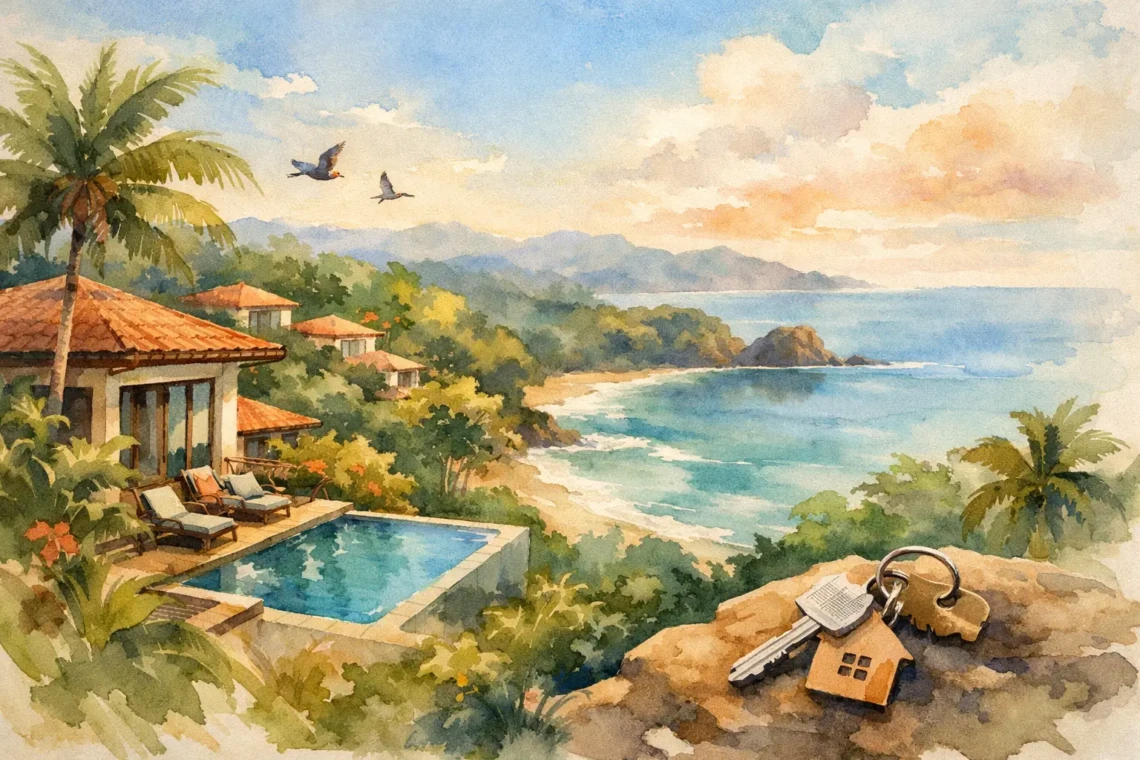
The road you choose in this part of Costa Rica can change the kind of life you build here. Ten minutes can mean more surf traffic, more nightlife, more dust in dry season – or more quiet mornings, birdsong, and room to breathe. That is why Cobano real estate deserves a closer look from buyers who want more than a postcard view.
For many international buyers, Cóbano sits in an interesting middle ground. It gives you access to sought-after beach towns and natural attractions, but it can also offer a calmer daily rhythm than buying right in the busiest tourist strips. If you are thinking about a second home, a rental property, a relocation plan, or a mixed lifestyle investment, this is where details matter.
People often start their search with the beach in mind, then realize the bigger decision is how they want to live between beach trips. Cóbano appeals to buyers who want proximity without being in the centre of constant movement. You can still reach Santa Teresa, Montezuma, Manzanillo, and other popular spots, but your home base may feel more grounded and practical.
That balance matters for different kinds of buyers. A couple planning part-time stays may want a home that feels private and easy to maintain. A family may care more about space, access roads, and daily convenience. A remote worker or long-stay visitor may prioritize reliable internet, quiet surroundings, and a layout that works for real life, not just holidays.
The local market also attracts buyers who think in two directions at once: personal use and rental income. A property that works well for owner stays can sometimes perform well as a short-term or mid-term rental, especially if it is well furnished, comfortable in all seasons, and close enough to the region’s main draws.
When people talk about property in this area, they are not all buying the same thing. Some want turnkey villas. Others are looking for land with future building potential. Some want a simple home base. Others want a property that can become a hospitality project or a long-term investment.
That is why pricing can vary sharply even within a relatively small area. The view, road access, water availability, topography, legal status, and distance to beach towns all influence value. A lower-priced parcel may look attractive at first, but if the land is steep, difficult to access in rainy season, or expensive to service, the numbers can shift quickly.
A finished home has a different set of questions. You are not only evaluating location and structure. You are also looking at ventilation, heat management, drainage, durability of materials, and how the home fits the climate. A modern villa that looks beautiful online still needs to function well during a strong rain and a humid month.
This is often the biggest trade-off in Cobano real estate.
Closer to high-demand beach areas, you may benefit from stronger nightly rental appeal and easier guest marketing. The trade-off is usually higher purchase prices, more competition, more traffic, and in some pockets, less privacy. You may also feel the pressure of a faster-changing market, where trends move quickly and expectations keep rising.
Slightly inland, including quieter pockets around Río Negro and nearby areas, buyers often find more peace, more greenery, and better value for space. This can be especially appealing for longer stays, remote work, or owners who want a restorative home environment. The trade-off is that you are selling a different lifestyle if you plan to rent it out. Guests need to understand the value of staying in nature while keeping the beach within reach.
For many buyers, that is not a weakness. It is the point. A well-positioned home outside the busiest centre can appeal to travellers who want comfort and calm after a day out. That is one reason boutique, nature-immersed stays continue to attract attention in this region.
A good investment here is rarely about square footage alone. In this market, comfort, setting, and practical design carry real weight.
Homes with natural light, strong airflow, dependable air conditioning where needed, and outdoor spaces that feel private tend to stand out. So do properties with laundry, functional kitchens, secure parking, and internet that supports longer stays. These features may sound basic, but for international guests and relocating buyers, they shape the day-to-day experience.
The setting matters just as much. Wildlife, mature trees, and a feeling of connection to nature are not small extras in this area. They are often part of the reason people choose it in the first place. At the same time, too much isolation can become a drawback if roads are poor or services feel too far away.
The strongest properties usually balance both sides well. They feel peaceful without feeling inconvenient. They offer privacy without making every errand a project.
This is not a market where you want to buy only from photos and broad assumptions. Even experienced buyers benefit from slowing down and asking better questions.
Start with access. Visit in conditions that reflect real life, not only the best weather. A road that feels manageable in dry season may feel very different after steady rain. Then look at utilities and infrastructure. Water source, power stability, internet options, and drainage are not background details here.
Legal and land-use review also deserves patience. Property boundaries, concessions, registered plans, zoning considerations, and building permissions should all be checked carefully with qualified local professionals. If you are buying land with plans to build, the gap between what seems possible and what is permitted can be expensive.
It also helps to spend time in the exact micro-area before deciding. A location that feels ideal for a short visit may not be the right fit for a longer stay. Noise patterns, nearby construction, road use, and community feel all become clearer when you stay nearby for more than a day or two.
That on-the-ground perspective is where a hospitality-led brand can sometimes add value. A business that already hosts guests in the region often sees what visitors love, what they complain about, and which features make people want to stay longer.
Many buyers try to make one property do everything. Sometimes that works. Sometimes it leads to compromise.
If your main goal is personal use, you may care most about comfort, privacy, layout, and a peaceful setting. You might accept a slightly less central location in exchange for a better day-to-day experience. If your main goal is revenue, occupancy patterns, guest preferences, ease of management, and maintenance costs may shape your decision more strongly.
The best answer is often somewhere in the middle. A property can support income and still feel personal, but it should be designed and purchased with that dual purpose in mind. Think about storage for owner use, durability of finishes, cleaning logistics, and how easily a guest can understand the arrival and stay experience.
Short-term rental performance also depends on presentation and operations. A beautiful property can underperform if the booking flow is weak, the hosting is inconsistent, or expectations are set poorly. On the other hand, a well-run villa with attentive local hosting can create repeat stays and stronger reviews, even without trying to compete as a full luxury resort.
There is genuine interest in this region for a reason. Buyers see natural beauty, tourism demand, and a lifestyle that feels lighter than what they are leaving behind. But a market can be attractive and still require discipline.
Construction costs, maintenance in a tropical climate, and property management realities should all be part of the budget from the start. So should your timeline. If you need immediate returns, a renovation or land play may not be the right route. If you are buying for a five- to ten-year horizon, you may be able to prioritize fit over speed.
Cobano real estate can be a smart move for buyers who understand that this is not only a location purchase. It is a daily-life purchase. You are choosing how close you want to be to activity, how much nature you want around you, and what kind of experience you want to create for yourself or your guests.
If you are still deciding, spend a little more time here than you think you need. Drive the roads, stay in different pockets, notice what helps you relax, and pay attention to what feels sustainable. The right property usually becomes clearer when you stop asking what looks best on paper and start asking where you would genuinely want to wake up.


Plan relaxed beach days on Costa... Read More

Compare a vacation rental versus resort... Read More

Learn how to find quiet stays... Read More

you are in reality a good webmaster. The web site loading speed is incredible.…
If the digital nomad is looking for tranquility, space, high-speed internet and the chance…
Great content! Keep up the good work!
You are very welcome and thanks for your comment. We really appreciate it.
Once you’ve nailed down the desired functionality of your new patio, think about the…

Enter your email address and we will send you a link to change your password.
Join The Discussion