

Playa Carmen versus Playa Hermosa: Which Fits You?
- October 29, 2026
- Blog
Compare Playa Carmen versus Playa Hermosa for surf, dining, quiet stays and remote work, so you can choose the right Costa Rica... Read More
 by User Deleted
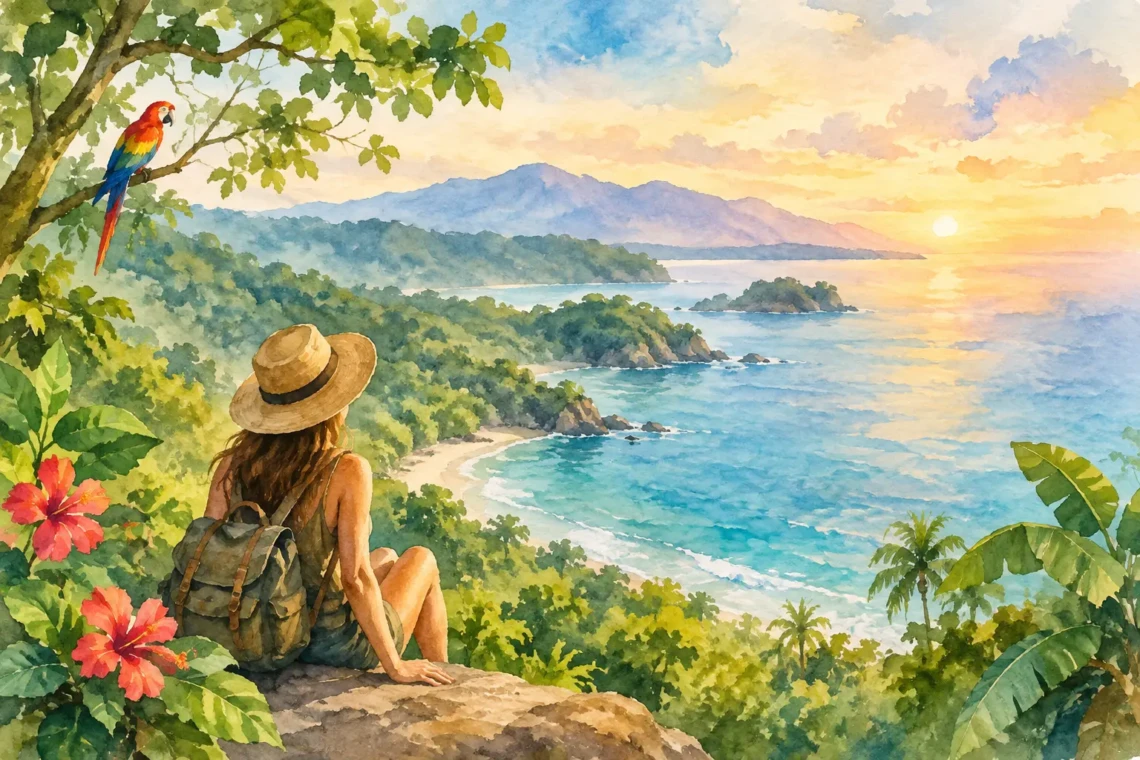
The first howler monkey call often arrives before your alarm. A few minutes later, the air warms, coffee is brewing, and the day has not yet asked anything of you. That is the appeal of slow travel Costa Rica: giving a place enough time to become familiar, rather than treating it as a backdrop for a packed itinerary.
For many visitors, Costa Rica begins with ambitious plans – several regions, a new hotel every few nights, every waterfall and beach marked on a map. There is nothing wrong with seeing a lot. But on the Nicoya Peninsula, distance is measured differently. Roads can be slow, rain can change plans, and a beach afternoon can easily become the best part of the day. Staying longer lets you work with that rhythm instead of against it.
Costa Rica has an extraordinary amount to offer in a relatively small country, but moving around still takes time. A route that appears short on a map may include unpaved roads, ferry crossings, traffic, or a stop for a fresh coconut when you least expect it. Constantly changing bases can turn a restorative trip into a series of check-out times and luggage runs.
Slow travel replaces that pressure with a simple question: what would it feel like to live here for a while? You begin to recognize the road to your favourite beach. You learn which fruit is in season at the local shop, where to find a quiet dinner, and when the tide makes a particular stretch of coast best for swimming or surfing. Those small discoveries are often the memories that stay with you.
This style of travel is especially good for couples, independent travellers, young families, and remote workers. It leaves room for active days, but it also respects the need for shade, rest, good meals, laundry, reliable Wi-Fi, and a comfortable place to come home to. A beautiful destination feels very different when you have a kitchen, a proper night of sleep, and no need to repack tomorrow morning.
The southern Nicoya Peninsula works well for a longer stay because several distinct places are within reach of one home base. Santa Teresa brings surf culture, restaurants, shops, and long Pacific sunsets. Playa Carmen has an easygoing energy and useful everyday services. Playa Hermosa offers a little more space along the shore, while Manzanillo feels quieter and more removed. Montezuma adds waterfalls, tide pools, and a different village atmosphere.
You do not need to visit all of them in a single week. In fact, you will enjoy them more if you do not. Pick the beach that matches your mood that day, then allow time for the unplanned moments between activities. Maybe that is watching pelicans from the sand, stopping for lunch after a swim, or returning early because the villa pool and a book sound better than another drive.
A peaceful setting outside the busiest centre can be a practical choice, not a compromise. It gives you quieter mornings and evenings while keeping beaches and excursions accessible when you want them. At Villas Pura Vida, the idea is simple: modern comfort surrounded by nature, with enough privacy to make a short visit feel like a real break and a longer visit feel manageable.
Ten days is a strong starting point for slow travel in Costa Rica. It gives you time to recover from travel, understand the local area, and still leave a few open days. Two to four weeks is even better for visitors who work remotely or want to balance exploration with a more natural daily routine.
The right length depends on your travel style. If you are visiting Costa Rica for the first time and hope to see cloud forest, volcanoes, and the coast, divide the trip into two or three well-chosen stays rather than trying to cover the entire country. If your priority is beach life, nature, and rest, a single longer stay on the peninsula can be more rewarding than a rushed circuit.
Slow travel does not mean doing nothing. It means leaving space around what you do. Rather than booking every morning and afternoon, plan one main activity a day, or one larger outing every second day. The remaining time is where a destination begins to feel personal.
Start early when the heat is gentler. Walk the beach, surf, practise yoga, or simply sit outside with breakfast while the wildlife becomes active. Use midday for a long lunch, reading, remote work, or a rest indoors. Later, choose a sunset swim, a casual meal, or a drive to a nearby beach.
This rhythm also makes practical sense in the tropics. Rainy-season showers may interrupt an afternoon, and dry-season heat can make a tightly scheduled day feel harder than expected. If you leave room to adjust, weather becomes part of the experience instead of a problem to solve.
The most satisfying longer trips include ordinary moments. Shop for breakfast ingredients. Cook a simple meal with local produce. Do a load of laundry before it becomes urgent. Ask a host where residents go for a quieter beach day. These are not glamorous plans, but they create the ease that lets you enjoy the special plans more fully.
For remote workers, this matters even more. Before booking, consider whether the accommodation supports the way you actually live. Reliable internet, air conditioning, a functional kitchen, comfortable work space, and a calm environment can make the difference between a productive month and a frustrating one. It is worth confirming your needs directly, particularly if video calls are part of your workday.
Going slower naturally lowers some of the pressure that tourism can put on a destination. Fewer transfers mean less time on the road. Shopping locally and choosing nearby guides keeps more of your travel spending connected to the community. Staying long enough to learn local routines also makes it easier to be a considerate guest.
In coastal Costa Rica, that can be as simple as carrying a reusable water bottle, keeping noise low at night, giving wildlife plenty of space, and avoiding leaving anything on the beach. Monkeys, iguanas, birds, and other animals may appear close to where you stay, but they are not there for feeding or handling. Enjoy the encounter quietly and let them remain wild.
Road conditions deserve respect too. If you rent a vehicle, choose one that suits the routes you expect to take, particularly during the green season. Do not plan important connections too tightly. A slower approach is safer, and it tends to be more pleasant for everyone travelling with you.
A longer stay can also be valuable if you are considering spending part of the year in Costa Rica, relocating, or investing in property. A quick holiday shows you the highlights. Several weeks reveal the practical details: road access, grocery options, internet reliability, rainfall, neighbourhood noise, and how far you truly want to be from the beach or town.
Try living according to a normal schedule for a few days. Work from the area, cook, run errands, and visit different communities at different times. Santa Teresa may feel right for one person because of its energy and convenience; another may prefer the quieter surroundings near Río Negro or Cóbano. There is no universal best location, only the one that fits the life you want to build.
That perspective is useful whether you are booking a villa for a month or beginning to explore a more permanent connection to the peninsula. The goal is not to rush a decision, but to give the place a fair chance to show you its everyday character.
Leave one day unplanned near the end of your stay. By then, you will know whether it should be a return to your favourite beach, a waterfall walk, a long lunch, or simply another quiet morning listening to the forest wake up.

Slow travel Costa Rica means fewer... Read More

Compare Playa Carmen versus Playa Hermosa... Read More

Hotel vs private villa Santa Teresa:... Read More
Hello to every one, because I am truly keen of reading this website's post…
I don't even know how I ended up right here, however I assumed this…
you are in reality a good webmaster. The web site loading speed is incredible.…
If the digital nomad is looking for tranquility, space, high-speed internet and the chance…
Great content! Keep up the good work!

Enter your email address and we will send you a link to change your password.
Join The Discussion