

What Is Included in Villa Rental Bookings?
- July 27, 2026
- Blog
Wondering what is included in villa rental stays? Learn what to expect from kitchens and Wi-Fi to privacy, cleaning, support and Costa... Read More
 by User Deleted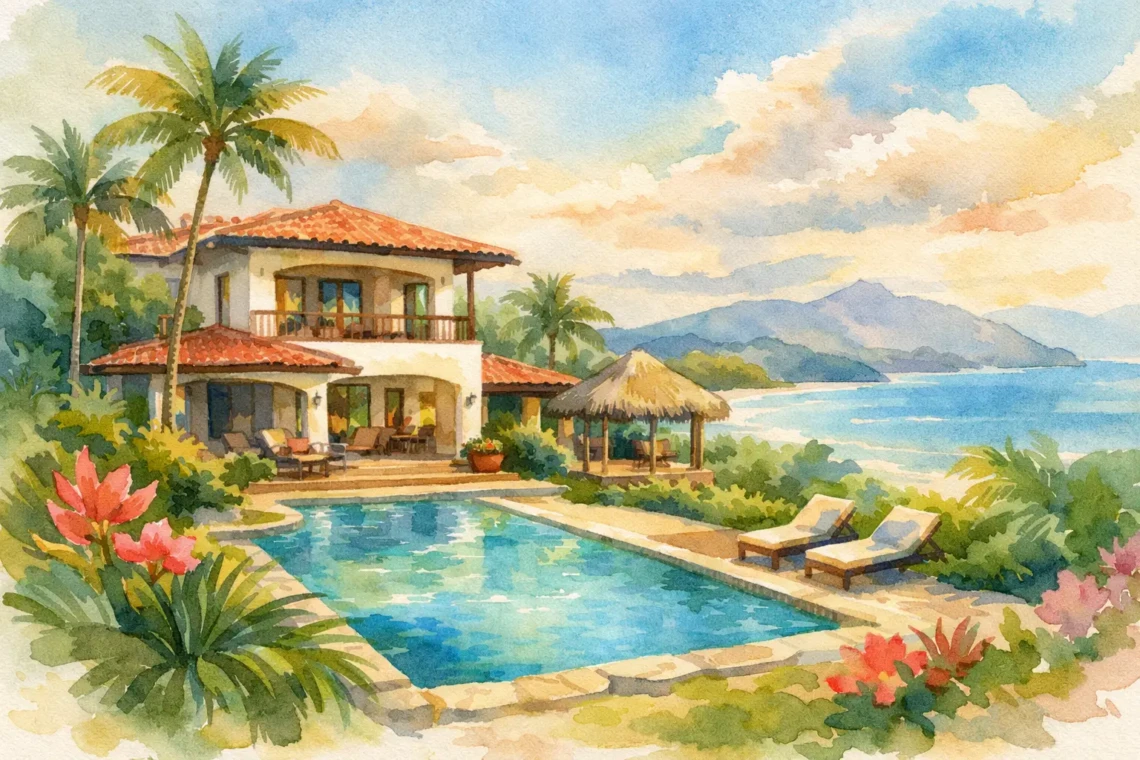
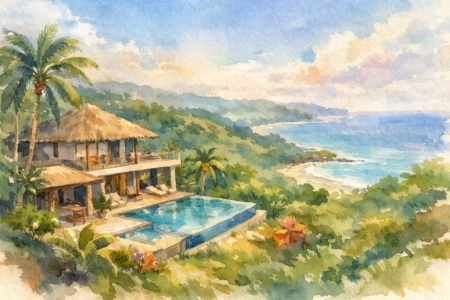
A villa in Costa Rica can look like a simple dream from afar: mornings with howler monkeys in the trees, a swim before breakfast, and a home that can also welcome guests when you are away. This guide to buying a Costa Rica villa starts with the less-photographed side of that dream – choosing a location that fits your life, verifying what you are buying, and planning for the realities of owning a home in a tropical country.
For many Canadian buyers, the appeal is not only a holiday property. It is the possibility of longer stays, remote work, future relocation, or a rental home in a place they already love. The best purchase is rarely the villa with the most dramatic listing photos. It is the one that works well in the rainy season, has dependable access and services, and suits the way you want to spend your time in Costa Rica.
Before looking at properties, decide what the villa needs to do for you. A private retreat for a few weeks each year calls for different priorities than a home for a family, a base for working remotely, or an income-producing rental.
If rental income matters, think as a guest would. Privacy, a well-equipped kitchen, air conditioning, reliable Wi-Fi, laundry, easy parking, and a pool can carry more value than extra square footage. A peaceful setting near beaches and restaurants may appeal to travellers who want to explore without staying in the busiest part of town. On the other hand, a more remote hillside home may offer outstanding views but require guests to be comfortable with steep roads and a vehicle.
For personal use, picture an ordinary Tuesday rather than a perfect holiday. Where will you buy groceries? How long will it take to reach the beach, a medical clinic, or the airport connection? Is the road manageable after heavy rain? Are you comfortable hearing wildlife, neighbours, or construction activity? Those answers shape daily life far more than a polished finish package.
Costa Rica is a small country, but local conditions change quickly from one community to the next. In the southern Nicoya Peninsula, Santa Teresa, Playa Carmen, Playa Hermosa, Manzanillo, Montezuma, Cóbano, and Río Negro each offer a different balance of beach access, services, pace, and privacy.
A home near the centre of Santa Teresa can put surf, cafés, shops, and restaurants close by. It can also bring more traffic, noise, and competition from other rental properties. Areas slightly inland or toward Río Negro may feel calmer and greener while still allowing access to several beaches. The trade-off can be a longer drive, road maintenance, or a greater need for a 4×4 vehicle.
Spend time in the area before committing. Visit in both dry and green seasons if possible. Drive the route to the property during the day and after dark. Check mobile coverage inside the home, ask how water is supplied, and notice whether nearby lots are vacant because they are protected, difficult to build on, or simply waiting for development.
Foreigners generally have the same property ownership rights as Costa Rican citizens. That does not mean every property follows the same rules. Ownership structure, title history, zoning, and coastal restrictions all deserve careful review by an independent Costa Rican real estate lawyer.
Many buyers hold property through a Costa Rican corporation, while others buy in their personal name. A corporation can help with ownership administration, succession planning, and separating property-related obligations, but it also creates annual filing, accounting, and compliance responsibilities. The right approach depends on your broader tax and estate plan, not just the purchase itself.
Coastal land needs particular care. Much of the first 200 metres from the high-tide line falls within Costa Rica’s Maritime Terrestrial Zone. In many cases, this land is not privately titled in the usual way and may be held through a concession with specific conditions. A concession can be valuable, but it is not the same as fee-simple ownership. Never assume that an ocean-view or near-beach listing has conventional title without a professional review.
Falling in love with a property is easy. Confirming that it is legally, physically, and financially sound takes a disciplined process. Your lawyer should represent you, not the seller or the seller’s agent, and should examine the property well before funds are released.
A proper review commonly includes:
Ask for clarity on what is included in the sale. Furniture, appliances, pool equipment, security systems, internet equipment, and even water tanks can materially affect the true cost of taking over a villa. If the property is rented, request a clear record of bookings, operating costs, maintenance history, and any agreements with staff or property managers.
An inspection is equally worthwhile. Tropical homes need ongoing attention. Moisture, salt air, intense sun, insects, drainage, roofing, retaining walls, and pool systems can all create expenses that are not obvious during a sunny viewing. A well-built villa is still a tropical villa, and maintenance is part of ownership.
A realistic budget makes the buying process calmer. Along with the agreed purchase price, buyers should allow for legal fees, registration costs, transfer taxes, closing expenses, inspections, insurance, furnishing, and setup costs. Your legal and financial advisers can provide estimates based on the current transaction and ownership structure.
Then consider the annual picture. Property taxes in Costa Rica may be lower than in many Canadian markets, but ongoing costs can include condominium or road fees, gardening, pool care, pest control, utilities, internet, security, repairs, insurance, and property management. A home that sits empty for months needs regular oversight, especially through the green season.
For rental-focused buyers, be conservative. High-season occupancy may look attractive, yet income can vary with weather, flight availability, economic conditions, new supply, and changing traveller preferences. Work from net income rather than nightly rates. Include cleaning, guest support, platform fees if applicable, taxes, repairs, replacement linens, and management before deciding whether a property meets your investment goals.
Buying from abroad is possible, but it should not be hands-off. A knowledgeable local agent can help you understand neighbourhood character and identify suitable homes. An independent lawyer protects your legal interests. A reputable inspector, accountant, insurance adviser, and property manager each add a different layer of confidence.
Look for people who answer direct questions directly. If a road is rough, a water source is seasonal, or a permit is still pending, you want that information early. The right team does not remove every risk. It helps you see the real trade-offs and make decisions with open eyes.
It also helps to stay in the area for a while before buying. Renting a comfortable villa can show you how local roads, internet, heat, wildlife, grocery runs, and beach traffic actually feel. A few weeks of lived experience often clarifies whether you want to be near the action or tucked into a quieter pocket of nature.
A Costa Rica property purchase does not automatically provide residency. If you plan to spend extended periods in the country, speak with a qualified immigration professional about the options available to you. Also consult Canadian and Costa Rican tax advisers before closing, especially if the villa will generate rental income or be held through a corporation.
Think ahead about inheritance and co-ownership as well. A clear estate plan can spare family members confusion later, particularly when the property is owned by a company or shared by partners. These conversations are not the most romantic part of buying a villa, but they are an act of care for the people who may one day need to manage it.
The right Costa Rica villa should give you more than a place to stay. It should leave room for slow mornings, beach days, and the confidence that your home is as practical behind the scenes as it is beautiful from the terrace.

A practical guide to buying a... Read More

Wondering what is included in villa... Read More

The future of Santa Teresa real... Read More
If the digital nomad is looking for tranquility, space, high-speed internet and the chance…
You are very welcome and thanks for your comment. We really appreciate it.
Once you’ve nailed down the desired functionality of your new patio, think about the…
This was helpful. Found this the other day and it cleared a lot up.…
phskycasino has some great games, and I'm really enjoying them. Definitely worth checking out…

Enter your email address and we will send you a link to change your password.
Join The Discussion